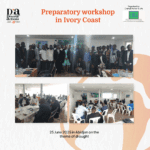
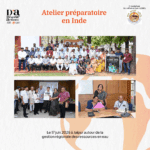
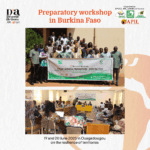
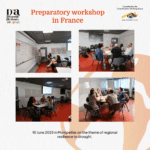
As part of the preparations for the Désertif’actions 2026 International Summit, scheduled for 25 to 28 March 2026 in Djerba (Tunisia), the Mission Inclusion association organised a national workshop in a hybrid format on 7 October 2025 at the Maison du développement durable (Montreal, Canada). The event brought together Canadian NGOs active internationally, researchers and practitioners in the field to work on the theme of territorial governance and the integration of desertification and resilience issues into policies and projects.
A special focus: countries of intervention and policy coherence
Rather than focusing on desertification in Canada, the organisations present chose to examine policy coherence in the countries where they operate (notably Burkina Faso, Mali, Niger and Chad). The workshop highlighted that, in these Sahelian contexts, the main problem is the inconsistency between public policies (agriculture, land, environment) and local realities, to the detriment of family farming and agroecological systems supported by small-scale producers.
Actions and innovations presented
Among the actions shared during the workshop:
- Climate/soil health advisory clubs (soil analysis, promotion of organic matter and water retention)
- Demonstration sites and identification of local champions to promote the adoption of practices
- Technical solutions: solar systems for food processing, biodigesters (e.g. Mission Inclusion’s ABC project) producing energy and organic fertilisers.
- Governance: strengthening local management committees, integrated approaches combining technical support and governance
- Knowledge and research: university-community partnerships for action research and the integration of local knowledge
Identified obstacles and proposed solutions
- Main obstacles identified: laws and policies that are sometimes contradictory or inappropriate, lack of coordination between customary actors and institutions, pressure on land, limited resources available to small organisations for advocacy, and harmful practices linked to a lack of training.
- Proposed levers: support regional networks (e.g. Sitsee or Pélum), increase the number of demonstration sites and “champions”, strengthen climate literacy and action research, and develop financial support mechanisms and targeted advocacy with regional authorities.
Advocacy messages
Trois cibles principales et leurs messages :
- Government of Quebec: ensure the sustainability and consistency of the PCCI (Plan for a Green Economy 2030 / sub-national climate financing mechanism) by confirming funding in the economic update or the 2026-2027 budget.
- Public opinion: promoting the return on investment of the PCCI (jobs, influence, climate benefits) through testimonials and field data (e.g. sequestration linked to biodigesters).
- International actors (COP, donors): promote the Quebec model as an example to be protected and valued in international exchanges.
Find all the recommendations in the full workshop report.